Leave Your Message
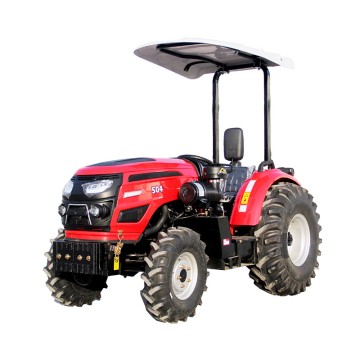
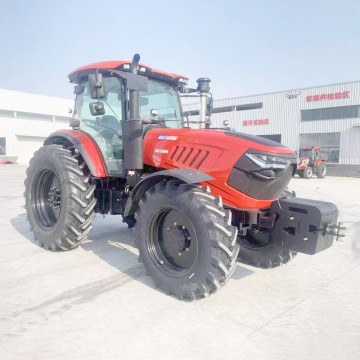
Explore our top-rated tractor loader models engineered for maximum efficiency in grain combining, field operations, and large-scale agricultural productivity.
Gold Dafeng has been deeply rooted in the agricultural machinery industry for over thirty years. It has not only solidified its development foundation through continuous technological innovation but also won global trust through comprehensive, high-quality services. With its strong R&D capabilities, the company has achieved fruitful scientific and technological results: successfully passing 30 new product appraisals and over 10 scientific and technological achievement appraisals, winning 10 science and technology awards, and having multiple products recognized as national key new products, demonstrating its leading position in the industry with its core strength. At the same time, we deeply understand the critical nature of "seizing the right time to harvest" in agricultural production and have built a full-chain service system to safeguard our global partners.
Decades of deep specialization in agricultural machinery manufacturing, with a proven track record of delivering world-class tractor loaders for grain combining and field operations across global markets.
30 new product appraisals, 10+ scientific achievement certifications, and 10 technology awards underscore our commitment to continuous innovation in tractor loader design and grain combining efficiency.
From pre-sales consultation to after-sales technical support, Gold Dafeng's comprehensive service network ensures zero downtime during critical harvesting seasons for partners worldwide.
A tractor loader is far more than a simple attachment — it is the core mechanical interface between raw harvested grain and the logistics chain that feeds the world. In modern grain combining operations, tractor loaders are deployed to transfer, stack, and transport bulk grain with precision and speed. Equipped with high-lift bucket systems, hydraulic control arms, and intelligent load-sensing technology, today's tractor loaders can handle thousands of kilograms per cycle without compromising field conditions. The integration of 4WD powertrains with front-end loaders dramatically reduces grain transfer time, enabling combine harvesters to maintain peak operational cycles without waiting for transport vehicles. In large-scale commercial farming, this synchronization between tractor loaders and combine harvesters is what defines the efficiency of the entire harvest operation.
The global tractor loader market for grain combining operations is undergoing rapid transformation, driven by increasing farm scale, labor shortages, and demand for precision agriculture solutions.
The global agricultural tractor market is projected to surpass $80 billion by 2030, with tractor loaders for grain handling representing one of the fastest-growing segments. Rising global food demand and the consolidation of smallholder farms into large commercial operations are primary growth drivers, particularly across North America, Europe, Southeast Asia, and Sub-Saharan Africa.
Modern agribusinesses operating thousands of hectares require tractor loaders with high payload capacity — often exceeding 3,000 kg per lift cycle — and the durability to run 18+ hours per day during peak harvest season. Industrial-grade diesel tractor loaders with reinforced chassis and heavy-duty hydraulic systems have become standard equipment on commercial grain farms globally.
China has emerged as the world's leading supplier of cost-competitive, high-performance tractor loaders. Chinese manufacturers like Gold Dafeng combine advanced engineering with competitive pricing, enabling farms in developing markets to access machinery that was previously only available to large agribusinesses in developed nations. Export volumes of Chinese agricultural tractors have grown by over 40% in the past five years.
The convergence of IoT sensors, GPS auto-steering, and telematics platforms with tractor loader systems is redefining operational efficiency. Real-time load monitoring, fuel consumption analytics, and predictive maintenance alerts allow farm managers to optimize fleet performance remotely — reducing grain combining cycle times by up to 25% compared to conventional manually-operated fleets.
Next-generation tractor loaders are being developed with autonomous navigation capabilities, allowing them to operate in grain fields with minimal human intervention. AI-powered path planning and obstacle detection systems enable loaders to execute complex grain transfer tasks around combine harvesters and grain carts automatically, maximizing throughput during time-critical harvest windows.
As sustainability pressures intensify, leading manufacturers are investing heavily in electric and hybrid tractor loader platforms. Electric powertrains offer significant torque advantages for loader operations, while reducing fuel costs and emissions. Hybrid models combining diesel engines with electric motors are already entering the market, offering 20–30% fuel savings without sacrificing the high-horsepower performance required for efficient grain combining.
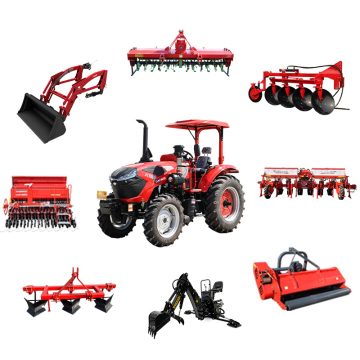
Modern tractor loader platforms are evolving into universal power units with standardized quick-coupler systems. A single tractor loader can be rapidly reconfigured with grain buckets, auger attachments, silage forks, or push-off blades — enabling one machine to perform the work of several specialized units across the grain combining season and beyond.
Advanced weighing systems integrated directly into loader arms provide real-time payload data, allowing operators to maximize truck loads without overloading. This technology, combined with GPS field mapping, creates digital grain flow records that integrate seamlessly with farm management software — providing complete traceability from field to storage facility.
Grain combining environments subject tractor loaders to extreme dust, moisture, and mechanical stress. The latest engineering advances include hardened Boron steel bucket edges, multi-stage air filtration systems, and sealed hydraulic components rated for continuous operation in temperatures ranging from -20°C to +50°C — ensuring maximum uptime in the most challenging field conditions.
As awareness of soil compaction's impact on crop yields grows, tractor loader manufacturers are developing wider low-pressure tire configurations and track-based loader systems that distribute machine weight more evenly. These innovations allow heavy-payload grain combining operations to proceed even in wet post-harvest conditions without causing significant soil structure damage.
From wheat fields to rice paddies, tractor loaders serve as the critical link in the grain combining workflow across diverse agricultural environments and operational scales.
In commercial wheat and corn production, tractor loaders work in synchronized tandem with combine harvesters — continuously transferring grain from on-the-go grain carts to waiting trucks or field-side storage bins. High-capacity loader buckets (1.5m³–3m³) minimize transfer cycles, keeping combine harvesters productive throughout daylight hours and maximizing daily harvest tonnage.
Beyond field operations, tractor loaders are indispensable in grain storage facilities for stacking, leveling, and loading grain in silos and flat storage buildings. Precision-controlled loader arms allow operators to build uniform grain piles that optimize storage density while maintaining proper aeration pathways — critical for preventing spoilage in long-term storage scenarios.
Compact tractor loader models are purpose-designed for greenhouse operations and smaller-scale grain farms where maneuverability in confined spaces is paramount. These machines deliver impressive lift capacity in a minimal footprint, making them ideal for vegetable seed grain harvesting, hop farms, and specialty grain operations that require precise material handling without disturbing delicate growing environments.
In rapidly developing agricultural regions across Africa, Southeast Asia, and South America, tractor loaders are enabling a step-change in grain combining productivity. Cost-effective Chinese-manufactured models with robust service networks are replacing manual labor and animal-powered grain handling, dramatically reducing post-harvest losses and improving food security at a regional level.
In export-oriented grain production regions, tractor loaders serve as the first link in an integrated supply chain that connects field harvest directly to port loading facilities. GPS-tracked loader fleets coordinate with logistics management systems to ensure continuous grain flow — eliminating bottlenecks between field harvest, on-farm storage, and bulk export terminals.
Feed mills and grain processing plants rely on heavy-duty tractor loaders for raw material intake, internal material movement, and finished product loading. In these industrial settings, tractor loaders must meet stringent uptime requirements — often operating on three shifts — demanding the highest levels of mechanical reliability, ease of maintenance, and operator ergonomics.
Gold Dafeng deeply understands the critical nature of "seizing the right time to harvest" in agricultural production. Our full-chain service system is built to safeguard your grain combining operations at every stage — from equipment selection and delivery to on-site technical support and rapid spare parts supply.

Partner with Gold Dafeng — China's leading tractor loader manufacturer — and equip your farm or agribusiness with precision-engineered machinery backed by 30 years of agricultural innovation and a world-class service network.
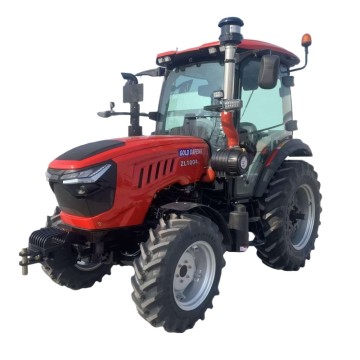
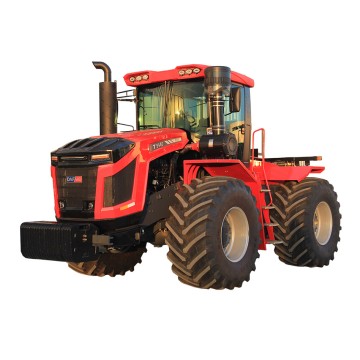
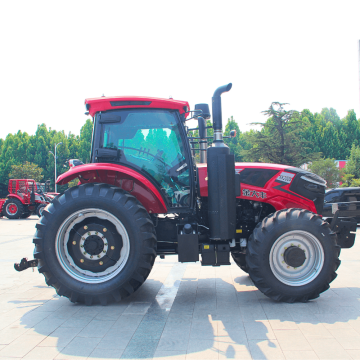
Explore Our Full Service RangeBrowse our full lineup of high-performance tractor loaders — from compact greenhouse models to 440HP industrial powerhouses — all engineered for efficient grain combining operations.