Leave Your Message
Explore our top-rated automated corn collection machines — engineered for high efficiency, precision field performance, and long-term reliability.
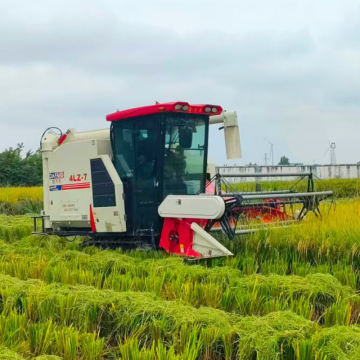
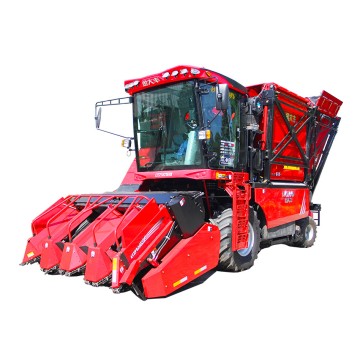
Gold Dafeng has been deeply rooted in the agricultural machinery industry for over thirty years. It has not only solidified its development foundation through continuous technological innovation but also won global trust through comprehensive, high-quality services.
With its strong R&D capabilities, the company has achieved fruitful scientific and technological results: successfully passing 30 new product appraisals and over 10 scientific and technological achievement appraisals, winning 10 science and technology awards, and having multiple products recognized as national key new products, demonstrating its leading position in the industry with its core strength.
We deeply understand the critical nature of "seizing the right time to harvest" in agricultural production and have built a full-chain service system to safeguard our global partners.

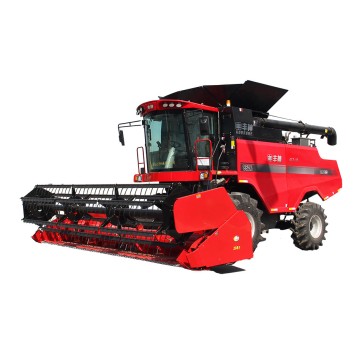
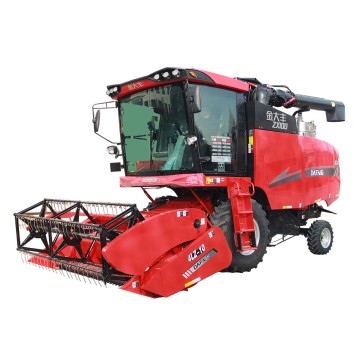
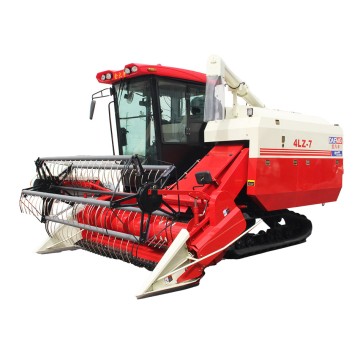
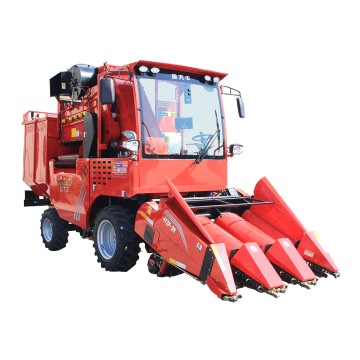
A sweet corn harvester is a specialized agricultural machine designed to mechanically pick, collect, and process sweet corn ears directly in the field — replacing labor-intensive manual harvesting with intelligent, automated systems that dramatically cut costs and increase throughput.
Advanced row-dividers and picking rolls precisely snap corn ears from stalks at high speed, minimizing kernel damage and field loss during automated corn collection.
Built-in threshing drums and multi-stage cleaning sieves separate husks, silks, and debris in a single continuous pass — delivering clean, market-ready corn in real time.
Self-propelled chassis with crawler or wheeled drive systems adapt to diverse terrain — from flat plains to hilly farmland — ensuring stable, efficient automated corn collection across all field conditions.
Modern sweet corn harvesters embed GPS guidance, yield mapping sensors, and IoT connectivity — enabling precision agriculture data collection alongside automated harvesting operations.
Large-volume grain tanks with rapid unloading augers minimize field stops, allowing continuous automated corn collection across extended acreage without productivity interruptions.
Heavy-duty steel frames, wear-resistant components, and simplified maintenance access points ensure long service life even under intensive commercial harvesting schedules.
The global agricultural machinery market is projected to surpass USD 280 billion by 2030, with automated corn harvesting equipment among the fastest-growing segments. Rising labor costs, expanding sweet corn cultivation for food processing, biofuel, and animal feed industries — combined with government subsidies for mechanized farming — are collectively driving unprecedented demand for intelligent sweet corn harvesters worldwide.
From small family farms to large-scale industrial corn processing operations, the deployment of sweet corn harvesters has reshaped how the global corn supply chain operates at every level.
Major food processing corporations — producing canned corn, frozen corn, and corn-based snacks — now operate dedicated automated corn collection fleets synchronized with factory processing lines. Sweet corn harvesters with GPS-guided row tracking and real-time yield monitoring allow processors to coordinate harvest timing precisely with factory capacity, eliminating post-harvest delays and reducing raw material waste by up to 18%.
Leading manufacturers are actively developing electric and hybrid-powered sweet corn harvesters to meet increasingly stringent global carbon emission regulations. Battery-electric corn harvesters reduce fuel costs by 35–50% compared to diesel equivalents, while delivering quieter operation and lower maintenance requirements — making them particularly attractive for operations near residential food production zones.
Artificial intelligence and computer vision technologies are being embedded into next-generation sweet corn harvesters. AI-driven systems can autonomously detect optimal harvest windows, identify damaged ears for rejection, and self-adjust harvesting parameters in real time based on crop density and moisture content — significantly improving automated corn collection quality and consistency at industrial scale.
Modern automated corn collection systems increasingly incorporate stalk chopping and field incorporation modules that return organic matter to the soil. This dual-function approach — harvesting corn while simultaneously preparing fields for the next crop cycle — reduces post-harvest tillage requirements and supports regenerative agriculture practices increasingly demanded by global food brands.
Commercial farming operations managing multiple sweet corn harvesters now rely on cloud-based fleet management platforms that aggregate machine performance data, predictive maintenance alerts, and harvest efficiency metrics. This digital infrastructure enables operations managers to maximize uptime during critical harvest windows and benchmark performance across entire fleets of automated corn collection equipment.
Southeast Asia, Sub-Saharan Africa, and Latin America represent the highest-growth frontiers for sweet corn harvester adoption. Government-backed agricultural modernization programs — combined with microfinance schemes enabling smallholder farmers to access mechanized harvesting — are rapidly expanding the addressable market for affordable, robust automated corn collection machines in these regions.
Automated corn collection technology serves a remarkably diverse range of agricultural and industrial contexts — each demanding specific machine configurations, performance characteristics, and operational capabilities.
Specialty sweet corn harvesters configured for whole-ear collection with minimal husk damage are essential for fresh market supply chains. Gentle picking mechanisms preserve ear appearance and marketability, while rapid field-to-cooler logistics enabled by automated collection ensure peak freshness for retail distribution.
High-throughput sweet corn harvesters with on-board husking and kernel cutting modules deliver pre-processed corn directly to cannery intake systems. This farm-to-factory automation reduces handling steps, cuts labor costs, and maintains the strict hygiene standards required by food safety regulations governing commercial canning operations.
Corn silage harvesters — a close variant of sweet corn harvesters — chop entire corn plants including stalks and leaves for fermented animal feed production. Dairy and beef operations deploy these automated corn collection systems to produce high-energy silage that maximizes livestock productivity throughout winter feeding seasons.
The biofuel industry relies on large-scale automated corn collection to supply ethanol refineries with consistent, high-volume corn feedstock. Sweet corn harvesters operating in coordinated fleets can deliver the precise supply volumes and scheduling that biorefinery operations demand, supporting renewable energy production targets set by national energy policies.
Seed corn production requires exceptional harvesting precision to prevent cross-contamination between hybrid varieties. Specialized sweet corn harvesters with enhanced cleaning systems and row-specific collection capabilities serve this high-value market segment, where the cost of seed loss or variety mixing far exceeds that of conventional grain production.
Research institutions and plant breeding programs utilize compact, configurable sweet corn harvesters for small-plot automated corn collection. These precision harvest systems enable researchers to accurately measure yield performance across hundreds of experimental varieties simultaneously — accelerating the development of higher-yielding, more resilient corn cultivars.
The sweet corn harvester industry is undergoing its most significant technological transformation in decades — driven by digitalization, sustainability imperatives, and the relentless demand for greater automated corn collection efficiency.
Unmanned sweet corn harvesters guided by RTK-GPS, LiDAR obstacle detection, and machine learning path planning are transitioning from prototype to commercial deployment — enabling 24/7 automated corn collection without operator fatigue constraints.
Harvest data recorded by automated corn collection systems is increasingly being linked to blockchain-based food traceability platforms — providing retailers and consumers with verifiable field-to-shelf supply chain transparency for premium sweet corn products.
Next-generation sweet corn harvesters will integrate real-time weather data and soil moisture analytics to dynamically adjust harvesting schedules and machine parameters — optimizing automated corn collection quality under increasingly unpredictable climate conditions.
Research programs are developing coordinated swarms of smaller, lighter sweet corn harvesters that work collaboratively across large fields — reducing soil compaction compared to single large machines while maintaining equivalent automated corn collection throughput.
Integrated biomass recovery modules will enable future sweet corn harvesters to simultaneously collect grain, recover stalks for biogas production, and return nutrient-rich residue to soil — creating fully circular automated corn collection systems aligned with net-zero agriculture goals.
Smartphone and tablet interfaces with AR-assisted diagnostics are becoming standard on premium sweet corn harvesters — empowering operators to monitor automated corn collection performance, diagnose issues, and order parts remotely from anywhere in the world.
From sweet corn harvesters to multi-crop combine systems — Gold Dafeng delivers factory-direct automated harvesting solutions for every agricultural application.