





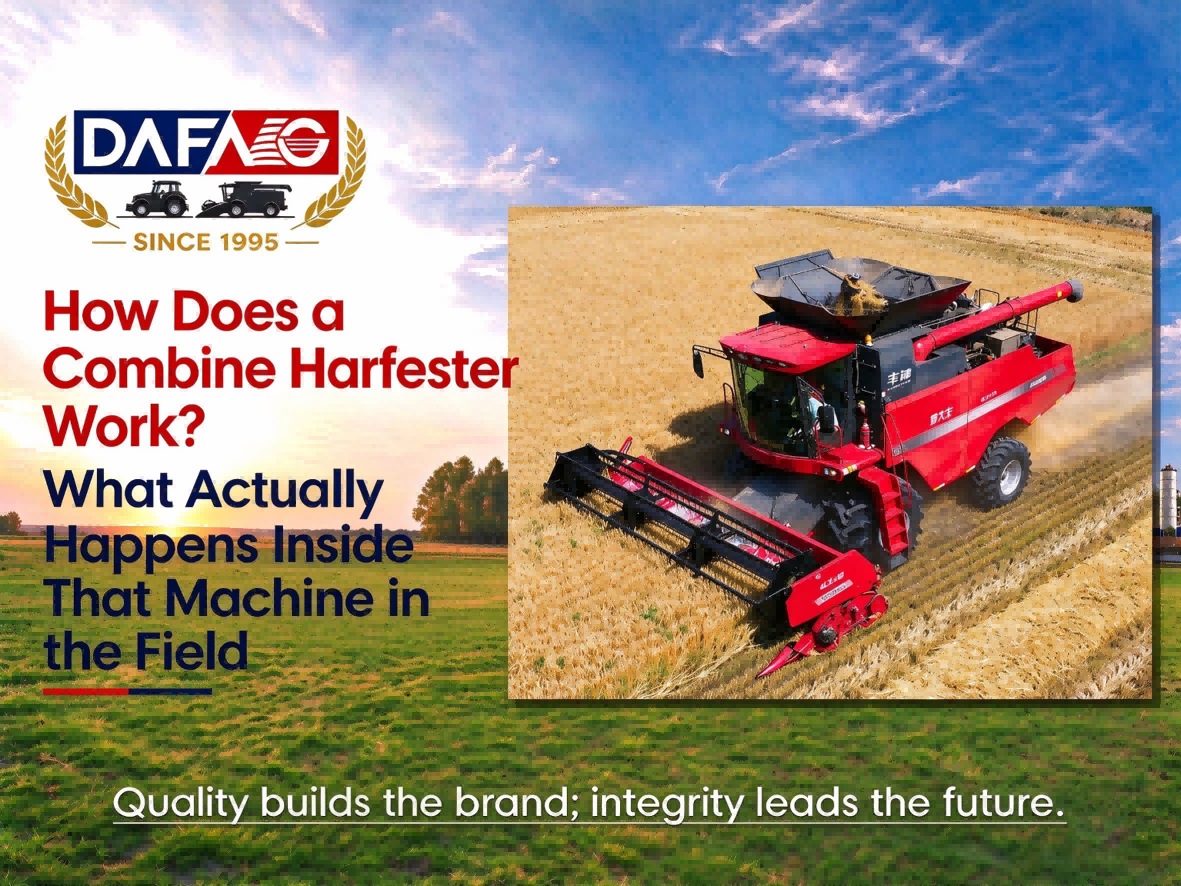





Differences Between Axial-Flow Combine Harvesters and Traditional Combine Harvesters
Against the backdrop of continuous upgrading in agricultural mechanization, combine harvesters, as core equipment in the grain harvesting process, their technological iteration directly affects agricultural production efficiency and income. Traditional combine harvesters have dominated the market for a long time with their mature technical systems, while axial-flow combine harvesters have gradually become the first choice for large-scale, modern agricultural production due to their unique structural design and operational advantages. This article will comprehensively analyze the differences between the two from multiple dimensions such as core structure, operational performance, applicable scenarios, and operation and maintenance costs, providing professional references for agricultural machinery selection and agricultural production layout.
The core function of a combine harvester is to complete a series of processes such as crop harvesting, threshing, cleaning, and straw treatment. The core difference between axial-flow and traditional models is concentrated in the structural design of the threshing and separation system, which is also the root cause of the differences in their operational performance.
Traditional combine harvesters adopt a segmented operation structure of "tangential drum + straw walker", with threshing and separation processes completed step by step. Their threshing drums are arranged horizontally, perpendicular to the crop conveying direction, and are also known as tangential drums. During operation, crops are transported between the drum and the concave plate, and the preliminary separation of grains and straw is achieved through the impact and extrusion forces generated by the high-speed rotation of the drum.
In the mixture after preliminary threshing, most of the grains fall into the cleaning system through the sieve holes of the concave plate, while the straw (stubble) with a small amount of grains is transported to the straw walker. The straw walker is a key component of traditional models, mostly with a reciprocating vibration structure. It shakes off the residual grains in the straw through vibration to complete secondary separation, and finally the straw is discharged out of the machine. The core characteristics of this structure are clear segmented processes and clear division of labor among components, but the operation process is relatively cumbersome and the number of components is large.
Axial-flow combine harvesters have completely broken the segmented operation mode, adopting a longitudinally arranged axial-flow drum (parallel to the crop conveying direction) as the core component, integrating the threshing and separation processes into a continuous operation flow. The axial-flow drum is equipped with spiral blades and threshing teeth inside. During operation, after the crops are fed into the drum, they move spirally along the axial direction of the drum under the push of the spiral blades, and at the same time, the separation of grains and straw is completed under the combined action of centrifugal force, friction force and impact force generated by the rotation of the drum.
Different from traditional models, axial-flow combine harvesters do not require a separate straw walker. The sieve outside the drum can directly screen the separated grains to the cleaning system, and the straw is directly discharged at the end of the drum. Some high-end axial-flow models are also equipped with a secondary cleaning device to further improve grain recovery rate. This continuous structure greatly simplifies the fuselage layout, reduces the number of core operation components, and makes the operation process smoother.
Based on the differences in core structure, axial-flow and traditional combine harvesters show obvious differences in key performance indicators such as operation efficiency, grain quality and crop adaptability, which are also the key contents that farmers focus on when selecting models.
Due to the adoption of segmented operation, traditional combine harvesters have a long conveying path for crops inside the machine, and the vibration separation efficiency of the straw walker is limited, resulting in slow overall operation speed and low operating volume per unit time. Generally speaking, the operation efficiency of traditional models is about 5-8 mu per hour, which is difficult to meet the needs of rush harvesting when facing large-scale contiguous planted crops.
The continuous operation mode of axial-flow combine harvesters shortens the residence time of crops inside the machine and improves the material conveying efficiency. The operation efficiency is generally 8-15 mu per hour, and some high-horsepower models can even reach more than 20 mu per hour.
Grain damage rate and loss rate are core indicators for measuring the operation quality. Traditional models usually have a grain damage rate between 3% and 5%. Especially for crops with larger particles such as corn and soybeans, the grain loss rate reaches 2%-4%.
The threshing method of axial-flow combine harvesters is softer. The grain damage rate can be controlled within 1%-2%. In addition, the centrifugal separation effect of the axial-flow drum is better, and the grain loss rate can be reduced to less than 1%.
The structural design of traditional combine harvesters is more suitable for crops with soft straw and small grains such as wheat and rice. When harvesting corn, soybeans and rapeseed, special threshing components need to be replaced, and the operation effect is not good.
Axial-flow combine harvesters have stronger crop adaptability due to their flexible structural design. By replacing different threshing teeth and sieves, they can easily harvest a variety of crops such as wheat, rice, corn, soybeans and rapeseed without large-scale modification of the fuselage structure.
Traditional combine harvesters: Small and medium-sized models cost about 50,000-100,000 yuan, and large models are between 150,000-250,000 yuan.
Axial-flow combine harvesters: Small and medium-sized axial-flow models cost about 100,000-180,000 yuan, and large high-horsepower models can reach 300,000-500,000 yuan.
Traditional Models: High vibration frequency components like straw walkers are prone to wear. Annual maintenance cost is about 5%-8% of the purchase cost.
Axial-Flow Models: Fewer core components and simpler structure. Annual maintenance cost is only 3%-5% of the purchase cost. Fuel consumption per unit area is 15%-20% lower than that of traditional models.
Suitable for small-scale farmers (planting area < 50 mu), single crops like wheat and rice, flat terrain, and areas with narrow agricultural machinery roads.
Suitable for large-scale farmers and cooperatives (planting area > 100 mu), multi-crop scenarios (corn, soybeans, rapeseed), complex terrain (hills, mountains), and high-humidity conditions.
When selecting a model, first clarify the planting scale and crop types. Secondly, combine the terrain and climatic conditions. Finally, consider the capital situation and long-term income. Axial-flow models have higher long-term cost performance and align with modern agricultural trends.
With the acceleration of agricultural modernization, the market share of axial-flow combine harvesters has increased year by year. Technology is constantly upgrading with intelligence and energy saving as key directions (intelligent feeding, grain loss monitoring, automatic navigation).
Traditional combine harvesters are also evolving into composite models like "tangential flow + axial flow". However, in the long run, axial-flow combine harvesters will become the core products in the future market, promoting mechanization and intelligent upgrading.
To sum up, the difference between axial-flow combine harvesters and traditional combine harvesters is essentially the structural and performance upgrading brought by technological iteration. The two have their own advantages and are suitable for different scenarios. Farmers need to comprehensively consider various factors according to their actual needs when selecting models. From the perspective of industry development, axial-flow combine harvesters are more in line with the needs of modern agricultural production, and will play a more important role in promoting agricultural quality and efficiency improvement and ensuring food security.